
Major Theme: The Intelligent Design and Fine-Tuning of the Universe (Part 2).
Scripture Foundation: Hebrews 1:3, Ecclesiastes 3:11, Genesis 2:7, Isaiah 40:12, Psalm 19:1.
Editor’s Note: This post continues our exploration of the precision-tuned nature of our universe, focusing on the fundamental constants and conditions that allow for complex life.
1. The Mass of the Electron (The Stable Foundation)
Background: The electron’s tiny mass is a fundamental parameter that determines the size of electron shells and the energy levels required for chemical reactions. It is precisely calibrated to allow for the stability of atoms. If the mass were even slightly different, the way atoms interact to form molecules would be fundamentally altered.
Scripture Connection: “…upholding all things by the word of his power…” (Hebrews 1:3)
Possible Results: If the mass of the electron were 2.5 times larger, electrons would be drawn so tightly to the nucleus that they would merge with protons, creating a “neutron universe.” In such a state, there would be no chemical bonding, no light, and no possibility for the complex structures required for life. The universe would be a dark, solid mass of neutrons.
2. The Expansion Rate of the Universe (The Perfect Timing)
Background: The initial outward expansion of the universe is a delicate balance between the explosive force pushing matter outward and the inward pull of gravity. This rate must be precise to within one part in 10^60. This is equivalent to balancing a pencil on its point for billions of years without it falling.
Scripture Connection: “He hath made every thing beautiful in his time: also he hath set the world in their heart…” (Ecclesiastes 3:11)
Possible Results: If the expansion rate were even slightly slower, gravity would have overcome the expansion almost immediately, causing the universe to collapse back upon itself in a “Big Crunch.” If it were even slightly faster, matter would have been dispersed so rapidly that it could never have coalesced to form stars, planets, or galaxies. Both extremes result in a universe that is either non-existent or entirely devoid of any life-supporting structures.
3. Carbon Synthesis / The Hoyle State (The Building Blocks of Life)
Background: Carbon, the essential building block of all known life, is produced in the hearts of stars through a rare process called the triple-alpha process. This process requires a specific “resonance” level in the carbon nucleus, known as the Hoyle State, which allows three helium nuclei to fuse into carbon. This resonance is a highly specific energy level that appears to be intentionally “tuned.”
Scripture Connection: “And the Lord God formed man of the dust of the ground…” (Genesis 2:7)
Possible Results: If this resonance level were shifted by as little as 4%, stars would be unable to produce carbon in sufficient quantities. Without carbon, there would be no organic chemistry, no solid planets, and no biological life. The universe would be filled with gas but lacked the complexity necessary for existence.
4. The Ratio of Electrons to Protons (The Perfect Balance)
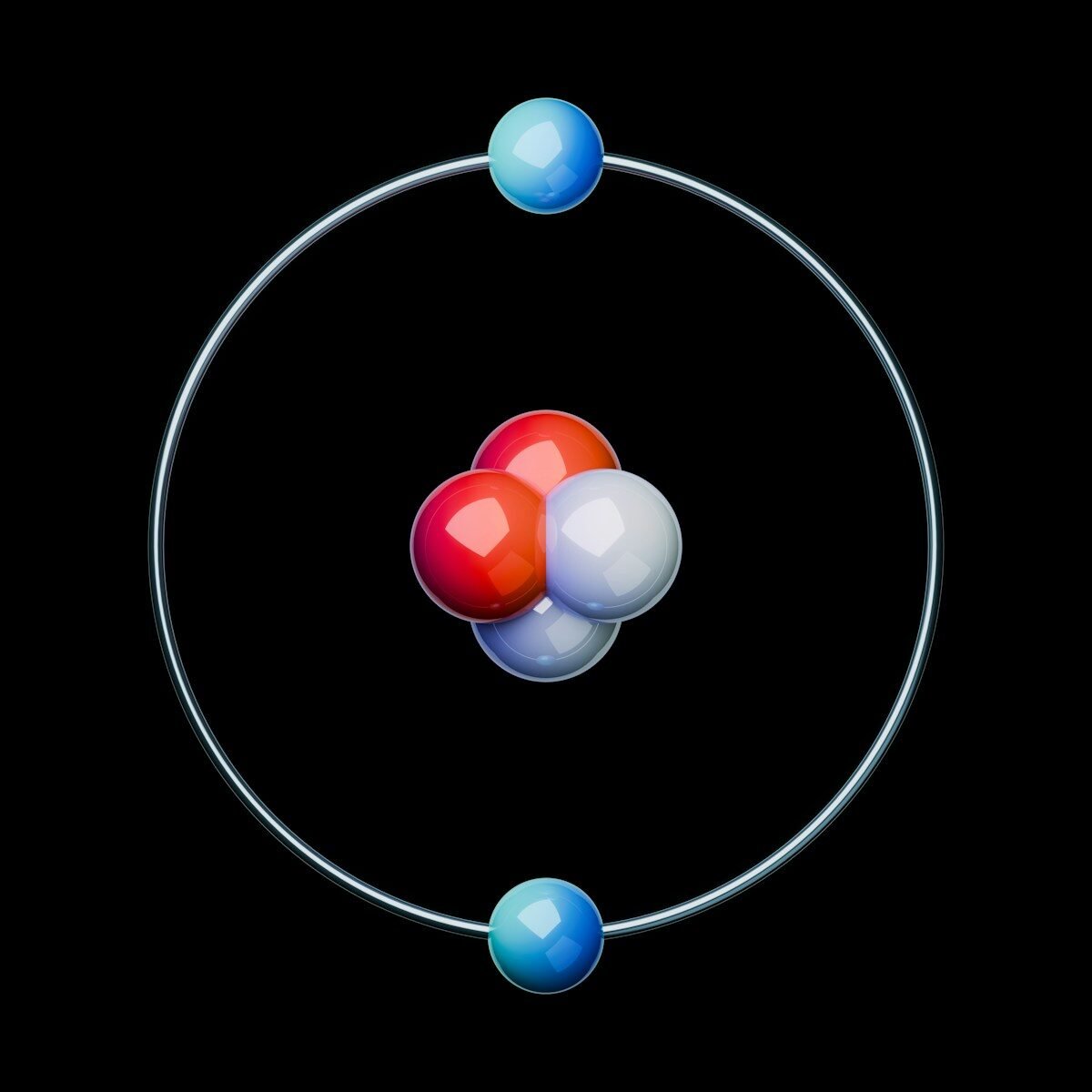
Background: For the universe to be electrically neutral and allow for the formation of stars and galaxies, the number of electrons must match the number of protons almost perfectly. This ratio is fine-tuned to a staggering one part in 10^37. This level of precision is comparable to covering the entire North American continent in dimes, stacking them to the moon, and then successfully picking one specific re-marked dime on the first try.
Scripture Connection: “Who hath measured the waters in the hollow of his hand, and meted out heaven with the span, and comprehended the dust of the earth in a measure, and weighed the mountains in scales, and the hills in a balance?” (Isaiah 40:12)
Possible Results: If this ratio differed by more than this tiny fraction, electromagnetic repulsion would have been so strong that gas clouds would have been blown apart before gravity could ever pull them together to ignite stars. The universe would consist only of scattered, individual particles with no light or heat.
5. Low Entropy of the Early Universe (The Master Design)
Background: Entropy is a measure of disorder. For the universe to contain complex structures like galaxies and living organisms today, it must have started in a state of extremely high order (ultra-low entropy). This initial state of order is the most precisely tuned parameter of all, estimated by Roger Penrose to be re-tuned to one part in 10^(10^123).
Scripture Connection: “The heavens declare the glory of God; and the firmament sheweth his handywork.” (Psalm 19:1)
Possible Results: If the universe had started with even slightly higher entropy (more disorder), it would have reached a state of “heat death” almost immediately. Instead of a universe filled with stars and life, it would have been a featureless, uniform soup of radiation where no work could be performed and no complexity could ever arise.
Deepening the Case: In Part 3, we will explore the mass of subatomic particles and the specific strengths of nuclear forces that act as the atomic “glue” for our universe. Read Part 3 here: The Eye of the Needle: The Universe Shouldn’t Exist (Part 3)
Visualizing the Evidence
Watch these presentations that summarize the incredible fine-tuning and design we have explored in this series.
Carbon Synthesis / The Hoyle State
Low Entropy of the Early Universe
Sources
- Barrow, J. D., & Tipler, F. J. (1986). The Anthropic Cosmological Principle. Oxford University Press.
- Collins, R. (2003). “The Evidence for Fine-Tuning.” In God and Design: The Teleological Argument and Modern Science, edited by Neil A. Manson. Routledge.
- Gonzalez, G., & Richards, J. W. (2004). The Privileged Planet: How Our Place in the Cosmos is Designed for Discovery. Regnery Publishing.
- Lennox, J. C. (2009). God’s Undertaker: Has Science Buried God? Lion Books.
- Lewis, G. F., & Barnes, L. A. (2016). A Fortunate Universe: Life in a Finely Tuned Cosmos. Cambridge University Press.
- Penrose, R. (2004). The Road to Reality: A Complete Guide to the Laws of the Universe. Alfred A. Knopf.
- Rees, M. (1999). Just Six Numbers: The Deep Forces That Shape the Universe. Basic Books.