
Major Theme: The Improbability of Our Sun and the “Just Right” Solar System (Part 6).
Scripture Foundation: Psalm 19:1-6, Genesis 1:14-19, Psalm 136:7-8.
Editor’s Note: Having looked at the design of our galaxy, we now focus on our own star and the unique architecture of the Solar System. The Sun is not just a random star, and our planetary system is not a typical arrangement. Both exhibit a level of precision that defies naturalistic probability.
1. Stellar Mass Fine-Tuning

Background: The Sun’s mass is the fundamental dial that determines its luminosity, surface temperature, and the specific wavelength of light it emits. In the vast spectrum of stars, the Sun occupies a precise middle-ground. If its mass were slightly higher or lower, the delicate balance required for a life-bearing planet would be instantly shattered.
Scripture Connection: “He appointed the moon for seasons: the sun knoweth his going down.” (Psalm 104:19)
Possible Results: If the Sun were just 5% more massive, it would burn much hotter and faster, shifting its light toward the lethal ultraviolet spectrum and exhausting its nuclear fuel too quickly for life to thrive. Conversely, if it were 5% less massive, the “habitable zone” would be forced so close to the star that Earth would become tidally locked—leaving one side to melt in eternal sun and the other to freeze in permanent darkness. Our Sun is perfectly weighted to provide stable, long-term energy.
2. Spectral Stability (The G2V Advantage)
Background: The Sun is classified as a G2V yellow dwarf. While these seem common to us, roughly 75% of all stars in the universe are M-dwarfs (Red Dwarfs). These smaller stars are notoriously unstable, prone to violent “super-flares” that can increase their brightness by hundreds of times in minutes, stripping away planetary atmospheres and ozone layers. Our Sun is an “anomalously” quiet star, maintaining a remarkably consistent output that is essential for biological stability.
Scripture Connection: “The sun shall not smite thee by day…” (Psalm 121:6)
Possible Results: Orbiting a more “typical” star would subject Earth to constant electromagnetic bombardment, making the development of complex DNA and stable ecosystems impossible. The Sun’s unusual stability acts as a cosmic “safe harbor.”
3. The Galactic Habitable Zone (Distance from Center)
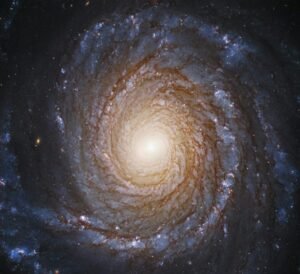
Background: Galactic geography is as critical as planetary geography. We are located approximately 26,000 light-years from the center of the Milky Way. This region is a narrow “ring” where the environment is clear enough of lethal radiation but rich enough in heavy elements to build planets. This position is a “sweet spot” that balances safety with the necessary chemistry for life.
Scripture Connection: “When he prepared the heavens, I was there: when he set a compass (circle or boundary) upon the face of the depth:” (Proverbs 8:27)
Possible Results: If our system were closer to the galactic center, the density of stars would lead to frequent gravitational disruptions and lethal doses of X-rays from the central black hole. If we were further out in the suburbs, there wouldn’t be enough “metallicity” (iron, magnesium, silicon) to form a rocky, terrestrial planet like Earth.
4. Position Between Spiral Arms (The Safe Corridor)
Background: The Milky Way’s spiral arms are regions of intense star formation, crowded with gas, dust, and short-lived stars that end in violent supernovae. Our Solar System is located in the “Orion Spur,” a quiet, relatively empty corridor between the major Perseus and Sagittarius arms. This placement ensures we are not caught in the “crossfire” of cosmic explosions.
Scripture Connection: “He leadeth me in the paths of righteousness for his name’s sake.” (Psalm 23:3)
Possible Results: Living inside a major spiral arm would mean frequent exposure to nearby supernovae, which would flood our atmosphere with cosmic rays and destroy the protective ozone layer. Our “spur” location provides a clear window for astronomical observation and biological safety.
5. Galactic Orbit Circularity
Background: Most stars follow highly elliptical or “plunging” orbits around the galactic center, moving in and out of dangerous regions. The Sun, however, follows a nearly perfect circular orbit. This allows us to maintain a constant distance from the hazardous inner galaxy and stay within the safety of the co-rotation radius (where we move at the same speed as the spiral arms, rather than crashing through them).
Scripture Connection: “In them hath he set a tabernacle for the sun, which is as a bridegroom coming out of his chamber… His going forth is from the end of the heaven, and his circuit unto the ends of it.” (Psalm 19:4-6)
Possible Results: An elliptical orbit would periodically swing us into high-radiation zones or regions with high stellar density, causing gravitational chaos in our planetary orbits. The Sun’s “circuit” is engineered for maximum stability.
6. Solar Metallicity

Background: The Sun is “metal-rich” compared to other stars of its age and type. In astronomy, “metals” are any elements heavier than hydrogen and helium. These elements—carbon, oxygen, nitrogen, iron, and phosphorus—are the precise building blocks required for rocky planets and the complex chemistry of life. The Sun possesses an abundance of these elements that is significantly higher than the average star in our neighborhood.
Scripture Connection: “The heavens are thine, the earth also is thine: as for the world and the fulness thereof, thou hast founded them.” (Psalm 89:11)
Possible Results: Without this specific chemical enrichment, the Solar System would consist only of gas giants and ice. There would be no iron for a planetary magnetic field, no oxygen for water, and no carbon for biological structures. The Sun was “founded” with the exact inventory needed to support a complex world.
Deepening the Case: In Part 7, we will examine the precision architecture of the Solar System and its giant guardians. Read Part 7 here: The Eye of the Needle: The Solar System Shield (Part 7)
Visualizing the Evidence
Watch these presentations that examine the precisely calibrated properties of our Sun and its unique role in supporting life.
The Galactic Habitable Zone (Distance from Center)
Spectral Stability (The G2V Advantage)
Sources
- Gonzalez, G., & Richards, J. W. (2004). The Privileged Planet. Regnery Publishing.
- Ross, H. (2016). Improbable Planet: How Earth Became Humanity’s Home. Baker Books.
- Ward, P. D., & Brownlee, D. (2000). Rare Earth: Why Complex Life is Uncommon in the Universe. Copernicus.
- Denton, M. J. (1998). Nature’s Destiny: How the Laws of Biology Reveal Purpose in the Universe. Free Press.
- Lewis, G. F., & Barnes, L. A. (2016). A Fortunate Universe. Cambridge University Press.