
Major Theme: Earth’s Chemical and Physical Fine-Tuning (Part 9).
Scripture Foundation: Psalm 104:24, Proverbs 8:26-29, Jeremiah 5:22.
Editor’s Note: Previously, we examined the primary physical shields and cycles that protect our world. In this second installment, we look at the finer details of Earth’s chemistry, rotation, and regulation—factors that are often overlooked but are mathematically essential for a planet to sustain life for more than a few moments.
1. The Triple Point of Water (Surface Pressure Tuning)

Background: Earth’s surface pressure is precisely tuned to allow water to exist as a solid, liquid, and gas simultaneously (the triple point). This allows for the complex weather systems, ice caps, and liquid oceans that regulate our global temperature. If the pressure were significantly different, water would either boil away or remain locked in ice regardless of the temperature.
Scripture Connection: “When he gave to the sea his decree, that the waters should not pass his commandment: when he appointed the foundations of the earth:” (Proverbs 8:29)
Possible Results: Without this pressure balance, the water cycle would fail, and the planet would lose its ability to transport nutrients and regulate heat. Earth is uniquely pressurized for the “commandment” of water.
2. Earth’s Precise Rotation Rate
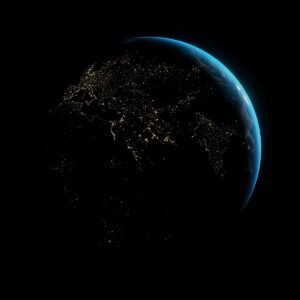
Background: Earth rotates once every 24 hours. This speed is fast enough to prevent the sun-facing side from overheating and the dark side from freezing, yet slow enough to prevent catastrophic atmospheric winds. Most planets rotate either too fast (creating 1,000 mph winds) or too slow (creating 200-degree temperature swings).
Scripture Connection: “Thus saith the Lord; If my covenant be not with day and night, and if I have not appointed the ordinances of heaven and earth;” (Jeremiah 33:25)
Possible Results: A slower rotation would result in massive “heat death” on the day side and “ice death” on the night side. Our 24-hour cycle is a “covenant” of temperature stability.
3. The Nitrogen Cycle and DNA Synthesis
Background: Nitrogen makes up 78% of our air, but it is chemically “inert”—life cannot use it directly from the sky. Earth has a complex system involving lightning and specialized bacteria that “fix” nitrogen into the soil. This biological infrastructure is the only source of the nitrogenous bases (adenine, guanine, cytosine, and thymine) that form the structural “rungs” of the DNA ladder. Without a constant supply of fixed nitrogen, the synthesis of the genetic code itself would be chemically impossible.
Scripture Connection: “O Lord, how manifold are thy works! in wisdom hast thou made them all: the earth is full of thy riches.” (Psalm 104:24)
Possible Results: Without this “manifold” cycle, the earth would be a graveyard of chemical elements that life could never access. DNA synthesis would cease, meaning life could neither grow nor reproduce. The nitrogen cycle is the hidden “richness” that provides the physical material for the very code of life.
4. Ocean Salinity Regulation
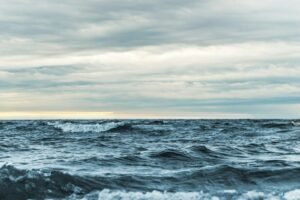
Background: The salt content of our oceans is maintained at a steady 3.5%. If salinity were much higher, the oceans would become toxic to most marine life and global currents (the “Great Conveyor Belt”) would stop. If it were lower, the oceans would freeze more easily and fail to regulate global climate. This balance is maintained by a complex interaction between rivers, volcanoes, and tectonic subduction.
Scripture Connection: “Fear ye not me? saith the Lord: will ye not tremble at my presence, which have placed the sand for the bound of the sea by a perpetual decree, that it cannot pass it: and though the waves thereof toss themselves, yet can they not prevail; though they roar, yet can they not pass over it?” (Jeremiah 5:22)
Possible Results: A shift in salinity would collapse the global food chain and the climate regulation system. The “decree” of the sea includes its chemical balance, not just its physical boundaries.
Deepening the Case: While the Earth is perfectly tuned for life, the transition from inorganic matter to a living, breathing ecosystem involves a level of precision that defies random chance. In the next installment, we examine the biological anomalies required for life. Read Part 10 here: The Eye of the Needle: The Breath of Life (Part 10)
Visualizing the Evidence
Watch these presentations that explore the unique design and improbable features of Earth and the Solar System:
Earth’s Precise Rotation Rate
The Nitrogen Cycle and DNA Synthesis
Ocean Salinity Regulation
Sources
- Ward, P. D., & Brownlee, D. (2000). Rare Earth: Why Complex Life is Uncommon in the Universe. Copernicus.
- Gonzalez, G., & Richards, J. W. (2004). The Privileged Planet. Regnery Publishing.
- Ross, H. (2016). Improbable Planet. Baker Books.
- Denton, M. J. (1998). Nature’s Destiny. Free Press.