
Major Theme: The Galactic Habitable Zone and the “Perfect Neighborhood” (Part 5).
Scripture Foundation: Isaiah 45:18, Psalm 8:3-4, Job 38:31-33.
Editor’s Note: Having explored the fundamental constants of the universe, we now “zoom in” to our own neighborhood. The Milky Way galaxy is not just a collection of stars; it is a precisely structured environment where life is only possible in a very specific, narrow corridor.
1. Cosmic Timing (The Golden Window)
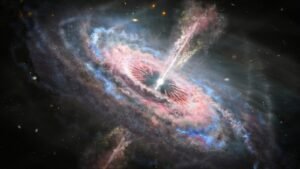
Background: [ We do not believe the universe is 13.8 billion years old (We believe the Bible). We include this only because even secular scientists’ own beliefs argue for an intelligent designer (God).] The universe is roughly 13.8 billion years old. However, life could not have existed at just any point in this timeline. In the early universe, only hydrogen and helium existed; the “heavy elements” (carbon, oxygen, iron) required for rocky planets and biological life had to be forged inside the hearts of multiple generations of stars and then distributed via supernovae.
Scripture Connection: “To every thing there is a season, and a time to every purpose under the heaven.” (Ecclesiastes 3:1)
Possible Results: If we appeared too early, there would be no solid ground to stand on—only gas giants. If we appeared too late, the star-forming gas in the galaxy would be exhausted, and the radioactive isotopes that heat the Earth’s core (enabling plate tectonics and a magnetic field) would have decayed away. We are in the “Golden Window” of cosmic history.
2. The “Void” Advantage (Lower Density Protection)
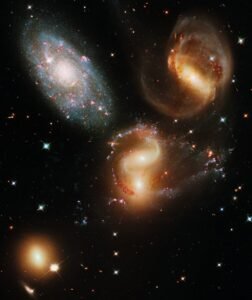
Background: Large-scale cosmic structures show that galaxies are arranged in “filaments” separated by massive, empty voids. The Milky Way is located near the edge of the KBC Void, a region of the universe with a significantly lower density than the cosmic average. This isolation is not an accident; it is a protective barrier.
Scripture Connection: “He stretcheth out the north over the empty place, and hangeth the earth upon nothing.” (Job 26:7)
Possible Results: In high-density regions, galactic “cannibalism” is frequent. When galaxies merge, the gravitational tidal forces strip planets from their stars and trigger massive “starburst” events. These events produce a lethal frequency of supernovae. Our placement in a “void” ensures the stability required for complex life to thrive without being interrupted by cosmic collisions.
3. Distance from “Active” Regions (Radiation Shielding)
Background: Many galaxies possess “Active Galactic Nuclei” or Quasars—supermassive black holes that are actively devouring matter and screaming out massive jets of X-rays and gamma radiation. These jets can extend for millions of light-years, sterilizing entire regions of space.
Scripture Connection: “He shall cover thee with his feathers, and under his wings shalt thou trust…” (Psalm 91:4)
Possible Results: If the Milky Way were located in a “rich” cluster near an active quasar, the constant bombardment of high-energy particles would strip away Earth’s ozone layer and eventually its entire atmosphere. Our remote location acts as a natural radiation shield, keeping us far from these “cosmic blowtorches.”
4. The “Local Group” Stability (Cosmic Neighborhood)
Background: The Milky Way belongs to the “Local Group,” a small collection of about 50 galaxies. This is a stark contrast to clusters like the Virgo Cluster, which contains over 1,300 galaxies in a relatively small volume of space.
Scripture Connection: “He shall dwell on high: his place of defence shall be the munitions of rocks…” (Isaiah 33:16)
Possible Results: In a dense cluster, the proximity of massive galaxies like M87 would create a chaotic gravitational environment. This would prevent stars from maintaining the stable, circular orbits around the galactic center that are necessary to keep a solar system in a habitable zone. Our small, quiet group provides a “munitions of rocks”—a stable fortress for our galaxy.
5. Galactic Type: The Spiral Advantage
Background: Only about 5-10% of galaxies in the universe are “grand design” spirals like the Milky Way. Most are elliptical (featureless blobs) or irregular (chaotic wrecks). Spiral galaxies are unique because they have “arms” where star formation is active, but also “inter-arm” regions that are relatively clear.
Scripture Connection: “The heavens declare the glory of God; and the firmament sheweth his handywork.” (Psalm 19:1)
Possible Results: Elliptical galaxies lack the “metallicity” (heavy elements) gradient needed to form rocky planets and have stars moving in random, “bee-swarm” orbits that lead to frequent close encounters. Irregular galaxies are often the result of collisions and are filled with lethal radiation. Only a stable spiral provides the structured, predictable environment life demands.
6. Supermassive Black Hole Stability
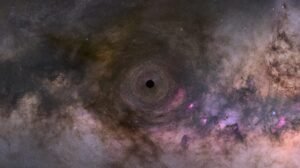
Background: At the heart of the Milky Way lies Sagittarius A*, a black hole 4 million times the mass of the Sun. While it is a monster, it is a “starving” monster. It is currently dormant, meaning it isn’t actively swallowing large amounts of gas and dust.
Scripture Connection: “The Lord on high is mightier than the noise of many waters, yea, than the mighty waves of the sea.” (Psalm 93:4)
Possible Results: If our central black hole were “active,” it would emit a “galactic wind” of radiation so intense that it would prevent the formation of stars in most of the galaxy and strip the atmospheres from any planets that did manage to form. Its current dormancy is a precise requirement for our safety 26,000 light-years away.
Deepening the Case: In Part 6, we will examine the design of our own star, the Sun, and its unique calibration. Read Part 6 here: The Eye of the Needle: Our Precisely Calibrated Sun (Part 6)
Visualizing the Evidence
Watch these presentations that explore the unique requirements for our galactic neighborhood to support life.
Distance from “Active” Regions (Radiation Shielding)
Galactic Type: The Spiral Advantage
Supermassive Black Hole Stability
Sources
- Gonzalez, G., & Richards, J. W. (2004). The Privileged Planet. Regnery Publishing.
- Ward, P. D., & Brownlee, D. (2000). Rare Earth: Why Complex Life is Uncommon in the Universe. Copernicus.
- Ross, H. (2016). Improbable Planet: How Earth Became Humanity’s Home. Baker Books.
- Barrow, J. D., & Tipler, F. J. (1986). The Anthropic Cosmological Principle. Oxford University Press.
- Lewis, G. F., & Barnes, L. A. (2016). A Fortunate Universe: Life in a Finely Tuned Cosmos. Cambridge University Press.