
Major Theme: Expansion & Preservation—how the improbable growth of the early Church led to the transformation of the Roman Empire, and how, after the collapse of Rome, the Church preserved faith, knowledge, and culture through the centuries.
Scripture Foundation: Matthew 13:31-33, Daniel 2:44-45, Revelation 11:15.
Editor’s Note: In this installment, we examine the remarkable spread of Christianity across the Roman Empire and its survival through the fall of Rome. Rather than reaching a conclusion, this post explores how the Church expanded its influence and preserved the foundation of Western civilization for generations to come. The journey of “The Eye of the Needle” series continues, highlighting the ongoing impact and endurance of faith through history.
1. The Victory of the Martyrs: Power through Suffering
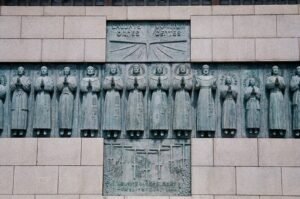
Background: For three centuries, the Roman Empire attempted to solve the “Christian problem” through systematic execution. Yet, the more the state struck, the faster the Church grew. This was the ultimate improbable victory: a kingdom that expanded not by shedding the blood of its enemies, but by the willingness of its citizens to shed their own. The martyrs proved that there was something more valuable than life itself, and their courage acted as a “seed” that eventually exhausted the Roman will to persecute. It was a victory of love over force, a concept the ancient world found utterly baffling yet undeniably powerful.
Scripture Connection:
“And they overcame him by the blood of the Lamb, and by the word of their testimony; and they loved not their lives unto the death.” (Revelation 12:11, KJV)
“Precious in the sight of the Lord is the death of his saints.” (Psalm 116:15, KJV)
Results: This moral endurance broke the back of paganism. It showed that the “Kingdom of God” was a reality that could not be contained by physical walls or destroyed by physical weapons, leading to the eventual conversion of the very empire that sought to erase it.
2. The Conversion of the Empire: The Improbable Edict
Background: In A.D. 313, the Edict of Milan fundamentally changed history. That a persecuted minority could, within a few generations, become the favored faith of the Emperor Constantine is one of history’s greatest “black swan” events. This was not merely a political move; it was the recognition that the old pagan gods were dead and that the Christian worldview was the only one capable of holding a crumbling empire together. The Church moved from the catacombs to the basilicas, bringing its radical ethics into the heart of Roman law and governance.
Scripture Connection:
“The stone which the builders refused is become the head stone of the corner.” (Psalm 118:22, KJV)
“Therefore thus saith the Lord God, Behold, I lay in Zion for a foundation a stone, a tried stone, a precious corner stone, a sure foundation: he that believeth shall not make haste.” (Isaiah 28:16, KJV)
Results: While this brought new challenges of power and corruption, it also allowed the Gospel to institutionalize its care for the poor, its protection of the weak, and its intellectual rigor, forming the bedrock of what we now call Western Civilization.
3. The Preservation of the West: The Church as Ark
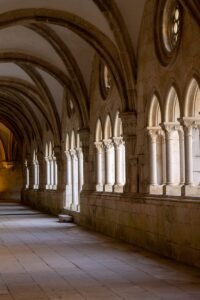
Background: When the Roman Empire finally collapsed under the weight of barbarian invasions, the only institution left standing was the Church. In an improbable turn of events, the “conquered” Christians became the teachers of their “conquerors.” Monasteries became the repositories of ancient knowledge, preserving the Bible and the classics through the Dark Ages. The Church acted as an “Ark,” carrying the seeds of civilization through the storm of collapse and planting them in the new soil of Europe.
Scripture Connection:
“The grass withereth, the flower fadeth: but the word of our God shall stand for ever.” (Isaiah 40:8, KJV)
“Heaven and earth shall pass away: but my words shall not pass away.” (Luke 21:33, KJV)
Results: This resilience proved that the Church was not dependent on any specific political system. It showed that the Gospel is a trans-cultural force that can survive the death of empires and rebuild societies from the ruins.
4. The Mustard Seed: The Growth of the Kingdom

Background: Jesus compared the Kingdom of God to a mustard seed—the smallest of seeds that grows into a massive tree. Looking back over 2,000 years, the improbability is staggering. A movement started by a handful of Galilean fishermen has grown into a global faith of billions, spanning every continent and culture. It has survived internal scandals, external persecutions, and the rise and fall of countless ideologies. This growth is not just a historical accident; it is the fulfillment of a divine promise that the Gospel would reach the ends of the earth.
Scripture Connection:
“Another parable put he forth unto them, saying, The kingdom of heaven is like to a grain of mustard seed… which indeed is the least of all seeds: but when it is grown, it is the greatest among herbs…” (Matthew 13:31-32, KJV)
“For the earth shall be filled with the knowledge of the glory of the Lord, as the waters cover the sea.” (Habakkuk 2:14, KJV)
Results: The sheer scale and endurance of Christianity serve as a powerful “Living Apologetic.” It invites every generation to consider that a message with such transformative power and persistence must have its origin in something—or Someone—beyond this world.
5. The Rule of Law: Christianizing the Code

Background: As the Church’s influence grew, Christian ethics began to seep into the very structure of Roman Law, most notably in the Justinian Code. The ancient principle of “might makes right” was slowly challenged by the biblical mandate for justice and the protection of the vulnerable. This legal transformation introduced protections for the poor, widows, and orphans that were historically absent in pagan jurisprudence. By weaving the Gospel’s moral compass into the legal fabric of the Empire, the Church provided a framework of order and justice that survived the transition into the medieval world.
Scripture Connection:
“He hath shewed thee, O man, what is good; and what doth the Lord require of thee, but to do justly, and to love mercy, and to walk humbly with thy God?” (Micah 6:8, KJV)
“Learn to do well; seek judgment, relieve the oppressed, judge the fatherless, plead for the widow.” (Isaiah 1:17, KJV)
Results: This shift laid the groundwork for the modern concept of the Rule of Law and human rights. It proved that the Gospel was not just a private spiritual matter, but a force capable of reforming the most powerful legal systems on earth, ensuring that the “least of these” were recognized under the law. This legal transformation ensured that when the political structures of Rome vanished, a more enduring foundation for justice had already been laid.
The Infrastructure of Permanence
The transition from a persecuted minority to the guardian of civilization is perhaps the most improbable chapter in the history of the faith. It demonstrates that the Gospel is not merely a set of ideas to be discussed, but a structural reality that builds, preserves, and restores. When the roads of Rome finally crumbled and the legions retreated, the “hardware” of the Empire failed. Yet, the “software” of the Church’s influence, the ethics of the martyrs, the wisdom of the monasteries, and the justice of the Christianized code, remained intact.
This endurance reveals a profound truth: the endurance of the Christian faith does not rely on the stability of human empires for its survival. Instead, it often provides the very stability that allows human society to survive its own collapse. The Church did not just expand; it became the anchor of the West, proving that the message of the Cross is the only force in history capable of turning a graveyard of empires into a garden of new beginnings. The “Eye of the Needle” was not just a narrow gate for the individual, but a threshold through which an entire civilization had to pass to find its soul.
Deepening the Case: We have seen how the faith expanded and preserved the world through the darkest of times. But the journey is far from over. In our next installment, we look at the internal challenges that threatened to undo what the Empire could not destroy. Read Part 20 here: The Eye of the Needle: The Narrow Gate of Survival (Part 20)
Visualizing the Evidence
Watch these presentations that explore themes of expansion, preservation, and the improbable growth of Christianity:
The Victory of the Martyrs and The Conversion of the Empire
The Preservation of the West: The Church as Ark
The Rule of Law: Christianizing the Code
Sources and Further Reading:
- The Holy Bible (King James Version).
- Dawson, Christopher. Religion and the Rise of Western Culture. Image.
- Jenkins, Philip. The Lost History of Christianity. HarperOne.
- Latourette, Kenneth Scott. A History of the Expansion of Christianity. Zondervan.
- Stark, Rodney. The Triumph of Christianity. HarperOne.
- Wright, N.T. The Resurrection of the Son of God. Fortress Press.