
Major Theme: Institutional Legacy and Social Paradoxes—The improbability of how a faith centered on a crucified Galilean peasant became the primary architect of global education, healthcare, and human rights.
Scripture Foundation: Matthew 5:14, 1 Corinthians 3:11, Matthew 20:26-28.
Editor’s Note: In our previous installment, we explored the global demographic reach of the faith. Now, we turn to its institutional footprint. We examine the paradox of how a movement that often eschewed worldly power became the very foundation upon which modern civilization’s most vital institutions—the university, the hospital, and the concept of universal human rights—were built.
1. The Birth of the University: Faith as the Mother of Reason
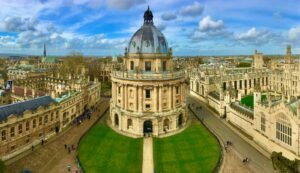
Background: It is a historical anomaly that the modern university system was born out of the medieval cathedral schools of Europe. The conviction that God is a God of order and that the universe is intelligible led to the institutionalization of higher learning. While secularism often claims reason as its own, the very structure of the “University” (seeking unity in diversity) was a theological project to understand the mind of the Creator through His creation.
Scripture Connection:
“The fear of the Lord is the beginning of knowledge: but fools despise wisdom and instruction.” (Proverbs 1:7, KJV)
“The works of the Lord are great, sought out of all them that have pleasure therein.” (Psalm 111:2, KJV)
Results: This legacy created the framework for the scientific revolution. By providing a stable, institutional home for inquiry, the faith ensured that knowledge was not merely a private luxury but a public good for the advancement of society.
2. The Invention of the Hospital: Compassion Institutionalized

Background: In the ancient Greco-Roman world, mercy was often seen as a weakness. The idea of an institution dedicated to caring for the sick—regardless of their status or ability to pay—was a radical Christian innovation. The “Hotel-Dieu” (Hostel of God) transformed the private virtue of charity into a public infrastructure of healthcare, driven by the belief that every human being bears the Imago Dei (Image of God).
Scripture Connection:
“And heal the sick that are therein, and say unto them, The kingdom of God is come nigh unto you.” (Luke 10:9, KJV)
“Heal the sick, cleanse the lepers, raise the dead, cast out devils: freely ye have received, freely give.” (Matthew 10:8, KJV)
Results: This created the global standard for medical ethics and public health. Even in secular societies today, the expectation that the vulnerable deserve care is a direct “institutional ghost” of this Christian foundation.
3. The Paradox of Human Rights: The Individual vs. The State
Background: The concept of “universal” human rights is a sociological improbability. Most historical cultures prioritized the tribe or the state, viewing the individual as expendable. This changed with the radical theological insistence that every person, regardless of utility or status, is a bearer of the Imago Dei(the Image of God). By anchoring human value in a divine likeness rather than state-granted permission, the faith provided the moral “DNA” for modern rights. It created the ultimate paradox: a faith that preaches absolute submission to God while simultaneously empowering the individual with a dignity that no earthly government can justly violate.
Scripture Connection:
“So God created man in his own image, in the image of God created he him; male and female created he them.” (Genesis 1:27, KJV)
“There is neither Jew nor Greek, there is neither bond nor free, there is neither male nor female: for ye are all one in Christ Jesus.” (Galatians 3:28, KJV)
Results: This theological anchor transformed the Imago Dei from a private belief into a public tool for social reform, fueling movements from the abolition of slavery to modern civil rights. Because the individual is seen as a reflection of the Creator, “rights” are recognized as objective truths to be protected, rather than mere political concessions. Without this foundation, the individual is left defenseless against the shifting consensus of the state.
4. The Preservation of Classical Wisdom: The Monastic Library

Background: During the collapse of the Roman Empire, it was the “improbable” monasteries that served as the arks of civilization. Monks meticulously copied not only Scripture but also the works of pagan philosophers, scientists, and poets. Without this religious obsession with the written word, the vast majority of classical Greek and Roman knowledge would have been lost to history.
Scripture Connection:
“Now go, write it before them in a table, and note it in a book, that it may be for the time to come for ever and ever:” (Isaiah 30:8, KJV)
“For enquire, I pray thee, of the former age, and prepare thyself to the search of their fathers: (For we are but of yesterday, and know nothing, because our days upon earth are a shadow:) Shall not they teach thee, and tell thee, and utter words out of their heart?” (Job 8:8-10, KJV)
Results: This preservation allowed for the Renaissance and the subsequent intellectual flowering of the West. The Church acted as the bridge between the ancient world and the modern, ensuring that the “conversation of the ages” was not silenced by the Dark Ages.
5. The Social Paradox: Power in Weakness

Background: The faith is most institutionally vibrant not when it holds the reins of state power, but when it operates as a “creative minority.” The paradox is that Christian institutions (schools, hospitals, charities) often lose their distinctive moral character when they become too closely aligned with the state. Their most improbable successes have come from the margins, where its only power is the power of service and truth.
Scripture Connection:
“But God hath chosen the foolish things of the world to confound the wise; and God hath chosen the weak things of the world to confound the things which are mighty.” (1 Corinthians 1:27, KJV)
Results: This ensures that the faith remains a perennial source of social renewal. Even when established institutions fail, the “weak” and “foolish” expressions of the faith rise up to build new ones that serve the needs of the age.
Summary and Impact: The Needle’s Eye of History
The “Architecture of Compassion” serves as a profound historical witness to the transformative power of a faith that entered the world through the narrowest of openings. By institutionalizing values that the ancient world often ignored—universal education, unconditional care for the sick, and the inherent dignity of the individual—this movement did more than just build buildings; it rewired the moral conscience of humanity. The impact is so pervasive that even in a secular age, we continue to live within the structures and ethical frameworks built by those who sought to follow the Galilean peasant.
Ultimately, these institutions represent the “Eye of the Needle” in a social sense. They demonstrate that true, lasting global impact does not come from the pursuit of raw power, but through the improbable path of service, intellectual rigor, and a steadfast commitment to the marginalized. The legacy of these institutions remains the primary evidence that a faith centered on a “weak” and “foolish” cross could become the very cornerstone of modern civilization.
Deepening the Case: For a further examination of how this message continues to defy the odds in the modern world, continue to The Eye of the Needle: The Resilience of the Message (Part 23).
Visualizing the Evidence
Watch these presentations that explore the institutional legacy and social paradoxes of the faith:
The Invention of the Hospital
(Great video if you can ignore the cat!)
The Paradox of Human Rights
The Social Paradox: The Power of Independent Missionaries
Sources and Further Reading:
- The Holy Bible (King James Version).
- Stark, Rodney. For the Glory of God: How Monotheism Led to Reformations, Science, Witch-Hunts, and the End of Slavery. Princeton University Press.
- Siedentop, Larry. Inventing the Individual: The Origins of Western Liberalism. Harvard University Press.
- Woods, Thomas E. How the Catholic Church Built Western Civilization. Regnery History.
- Mangalwadi, Vishal. The Book that Made Your World: How the Bible Created the Soul of Western Civilization. Thomas Nelson.