
Major Theme: The Resilience of the Message—The improbability of how a 2,000-year-old message continues to thrive and transform lives in a hyper-technological, secularized, and often hostile modern world.
Scripture Foundation: Romans 8:35-39, 1 Peter. 4:12-13, Hebrews 12:1-3.
Editor’s Note: In our previous parts, we explored the demographic reach and institutional legacy of the faith. In this installment, we look at the “Improbability of Survival.” We examine how the message survives external cultural and political pressures, remaining a vibrant and disruptive force in the 21st century.
1. Survival Against Secularism: The Persistent Sacred
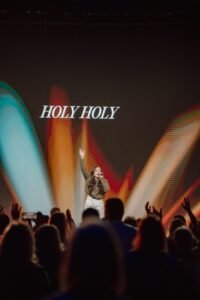
Background: For over a century, the “Secularization Thesis” predicted that as the world became more scientifically advanced and prosperous, religion would naturally wither away. However, the opposite has occurred. In the most “modern” contexts, the hunger for transcendent meaning has only intensified. The Christian faith remains the primary answer to the existential void left by materialism, proving that the human spirit is “incurably religious.”
Scripture Connection:
“He hath set the world in their heart, so that no man can find out the work that God maketh from the beginning to the end.” (Ecclesiastes 3:11, KJV)
Results: This persistence forces a re-evaluation of modern assumptions. It suggests that the Gospel is not an outdated myth but a perennial truth that addresses the fundamental human condition regardless of technological progress.
2. The Digital Catacombs: Faith in the Information Age
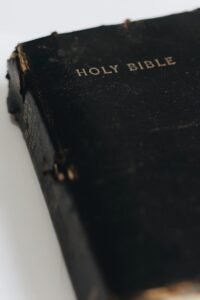
Background: Technology was expected to be the final nail in the coffin for ancient faiths. Instead, the digital age has become a new “Roman Road.” From underground house churches in restricted nations connecting via encrypted apps to the global explosion of digital Bible access, the message has adapted to the silicon world with improbable speed, bypassing state censorship and physical borders.
Scripture Connection:
“But the word of God is not bound.” (2 Timothy 2:9, KJV)
Results: This ensures that the message is always “one click away” from the seeker. It democratizes access to the faith, making it impossible for any single regime or cultural gatekeeper to fully suppress the Gospel.
3. The Resilience of the Persecuted: Growth Under Fire
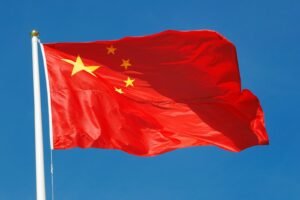
Background: It is a historical and sociological anomaly that the Church often grows fastest where it is most oppressed. In the modern era, more Christians have faced persecution than in the first three centuries combined. Yet, these “catacomb churches” exhibit a vitality and growth rate that puts the comfortable, institutionalized churches of the West to shame. The blood of the martyrs remains, improbably, the seed of the Church.
Scripture Connection:
“And I say also unto thee… upon this rock I will build my church; and the gates of hell shall not prevail against it.” (Matthew 16:18, KJV)
Results: This resilience proves that the faith is not a social construct dependent on cultural approval. Its survival under fire points to a source of strength that is external to human politics or psychology.
4. The Paradox of the Peaceful Threat: Why Tyrants Fear Love
Background: Rationally, a ruler should welcome a citizenry commanded to love their enemies, pay taxes, and obey the laws. Yet, totalitarian regimes often fear Christianity more than violent insurgencies. The paradox is that by commanding loyalty to a higher King (God), the faith creates a “free space” in the human soul that the State cannot occupy. A book that preaches peace (the Bible) is treated as a weapon of war because it empowers the individual with a dignity that no government can grant or take away.
Scripture Connection:
“Render therefore unto Caesar the things which are Caesar’s; and unto God the things that are God’s.” (Matthew 22:21, KJV)
Results: This quiet defiance through non-violence creates an improbable political tension. It proves that the most “dangerous” thing to a tyrant is not a sword, but a person who is no longer afraid to die because their ultimate loyalty belongs to another King.
The External Witness
The survival of the Christian message against secularization, digital censorship, and physical persecution demonstrates an external resilience that defies standard sociological predictions. These external pressures, rather than extinguishing the flame, have often served to refine and spread it further. The Word remains unbound, proving that no earthly power or cultural shift can fully silence the Gospel.
Deepening the Case: To explore the internal power of the message and its intellectual robustness, continue to The Eye of the Needle: The Internal Power of the Message (Part 24).
Visualizing the Evidence
Watch these presentations that explore the resilience and survival of the faith in the modern world:
Survival Against Secularism: The Persistent Sacred
The Resilience of the Persecuted: Growth Under Fire
The Paradox of the Peaceful Threat: Why Tyrants Fear Love
Sources and Further Reading:
- The Holy Bible (King James Version).
- Guinness, Os. The Global Public Square.
- Newbigin, Lesslie. Foolishness to the Greeks: The Gospel and Western Culture.
- Aikman, David. Jesus in Beijing.
- Open Doors International. World Watch List Statistics.